18 Feb, 2026
Feel free to reach out to us.
18 Feb, 2026
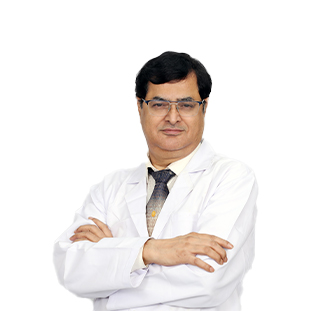
This article is medically reviewed by Dr. S. Bhattacharjee, Senior Consultant - Radiation Oncology, HCG Cancer Hospital, Bangalore.
In the last few years, advanced cancer technology has changed the way we find, treat, and manage cancer. Patients can now achieve better outcomes, fewer side effects, and a higher quality of life thanks to the shift from a one-size-fits-all approach to personalized treatment planning.
Innovation is at the heart of every department here at HCG. As one of the leading cancer hospitals in India, HCG has been an early adopter of innovative technologies and treatment approaches for three and a half decades.
Across the network, we have some of the most highly advanced AI-powered radiotherapy platforms, robotic surgery platforms, digital histopathology workflows, genomics-based cancer treatment approaches, and more, which help our doctors deliver the best quality cancer care to each patient.
This article looks at various new technologies that HCG uses to treat cancer, from diagnosis to therapy, and how they are changing the way cancer is treated in India.
Innovations in cancer treatment have positively impacted survival rates among cancer patients while also improving the quality of life. These innovations allow for personalized and patient-centric cancer care, which not only improves patient safety and treatment outcomes but also improves patient comfort and quality of life.
New cancer treatments have changed the way we care for people with the disease. Oncologists today use technologies that combine imaging, biology, robotics, and artificial intelligence to improve the accuracy of cancer diagnoses and the precision of treatments.
In comprehensive cancer hospitals like HCG, multidisciplinary tumor boards are set up, and they look at complicated cases and recommend comprehensive treatment plans for them using technological advancements like genomic profiling, specific biomarkers, and detailed imaging to make sure that the patient receives an accurate diagnosis and appropriate interventions.
Doctors can find tumors earlier and figure out exactly what they are like, thanks to advanced cancer diagnosis technologies like PET-CT for cancer, SPECT-CT imaging, MRI 3 Tesla for oncology, and digital pathology in cancer diagnosis.
2. Personalized and Precision MedicineToday, no two cancer patients are seen and treated the same way. With the advent of molecular profiling and genomics-driven oncology, oncologists are able to tailor cancer treatments to the specific health needs of patients. Personalized cancer treatment is made possible for all major types of cancer, and this approach not only optimizes the treatment outcomes but also improves the quality of life.
3. Improved Disease Prognosis and Better Survival RatesRadiotherapy technologies like CyberKnife, TrueBeam, Ethos adaptive radiotherapy, and Radixact X9 TomoTherapy deliver radiation with millimeter accuracy, which increases survival rates by reducing damage to healthy tissues.
4. Fewer Complications Due to Enhanced PrecisionMinimally invasive surgery and robotic surgery for cancer, particularly the da Vinci robotic surgery, allow surgeons to operate on tumors and remove them with unmatched accuracy and minimal blood loss. By improving the treatment precision, modern technologies can reduce the risk of treatment-related complications in cancer patients.
5. Development of Innovative Cancer Treatment ApproachesThe introduction of CAR T-cell therapy, immunotherapy, targeted therapy, and other targeted cancer treatment approaches represents a significant advancement in contemporary cancer treatment. By specifically targeting cancer cells, these approaches reduce damage to healthy cells and bring down side effects.
6. Enhanced Safety and Comfort for PatientsPatient safety and comfort are given utmost importance at comprehensive cancer hospitals like HCG. Dedicated technologies aim to lessen the severity of side effects and enhance the quality of life for patients. Scalp cooling therapy is one such technology.
7. Superior Quality Treatment Experience for PatientsPatients benefit from cancer care that focuses on their specific health needs. The use of advanced cancer diagnostic and treatment technologies benefits patients with better treatment results, fewer complications, reduced pain and discomfort, a swift recovery, and a better quality of life.
8. Better Quality of Life and Overall Well-being After TreatmentWith advanced cancer treatment technologies, HCG not only treats the disease but also aims to improve patients' quality of life, energy levels, and long-term health.
PET/CT for cancer uses both metabolic and anatomical information to detect even the smallest cancerous cells. As a leading PET/CT center in India, HCG uses scanners that are more sensitive and capture images faster, making staging and follow-up assessments more accurate.
SPECT imaging for cancer allows for functional visualization of tumors, especially in cases of bone metastasis, thyroid cancer, lung cancer, brain tumors, and neuroendocrine tumors. It provides us with information about how tumors use energy. This information helps in radiotherapy planning and treatment response monitoring.
HCG uses advanced 3 Tesla MRI technology for detailed cancer diagnosis. This imaging technique delivers high-resolution images of tumors in the brain, spine, and soft tissues, helping with real-time tumor classification and precise surgical planning.
3D Mammography, also known as digital breast tomosynthesis, supports early and accurate breast cancer detection, especially in women with dense breast tissue. It reduces the chances of false positives and false negatives and helps patients make informed decisions about their care.
High-definition endoscopic systems help technicians and doctors examine various body parts and take a biopsy of tumors in the gastrointestinal and respiratory tracts without any incisions.
Genomics and Molecular Diagnostics are a critical part of personalized cancer care at HCG. Genetic testing helps us identify the specific mutations that may increase the risk of cancer in the future, look for mutations that can be targeted through customized treatment plans like targeted therapy, and analyze the risk of recurrences. These tests have become an integral part of cancer diagnosis in recent years.
These tests have become an integral part of cancer diagnosis in recent years.
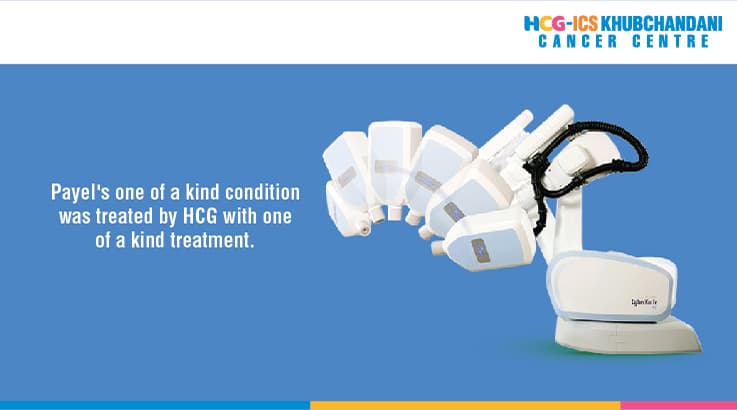
The CyberKnife radiotherapy system delivers high doses of radiation to tumors in the brain, lungs, spine, and prostate with sub-millimeter accuracy. This advanced radiation therapy requires fewer sessions and is associated with fewer side effects.
The cost of CyberKnife treatment in India depends on factors such as cancer type, stage, hospital, city, and the doctor’s expertise. Considered one of the leading hospitals for CyberKnife treatment in India, HCG offers comprehensive radiotherapy programs for various cancers.
HCG is one of the few places that offers Ethos Adaptive Radiation Therapy a cutting-edge platform that uses AI to change treatment plans on the couch during each session, based on the patient’s anatomical changes. It is the best example of precision radiotherapy technology for better accuracy.
With the da Vinci robotic surgery for cancer, surgeons can do complicated surgeries through small cuts with more control, which speeds up recovery. The Da Vinci robotic surgery costs in India can vary from one case to another, as it depends on the type of cancer, its stage, and the patient’s overall health condition.
This system uses CT imaging and radiation delivery to provide cutting-edge radiation therapy that can be done in a helical pattern. The machine revolves around the patient, targeting the tumor from multiple angles while reducing damage to healthy tissues.
For more information on personalized TomoTherapy in India, please reach out to HCG.
The Halcyon radiotherapy system offers quick, image-guided treatment that makes patients more comfortable by shortening their treatment time and making it more accurate.
The Varian TrueBeam and VitalBeam radiotherapy systems at HCG deliver high-dose-rate brachytherapy and external beam treatments with outstanding accuracy. This keeps the cost of precise cancer treatment in India low while still providing care that meets global standards.
Versa HD by Elekta is a flexible platform that offers both conventional and stereotactic body radiotherapy (SBRT), which means that treatments are shorter and more accurate.
Harmony Pro by Elekta is a next-generation system that focuses on the patient when treating cancer. It has shorter sessions, less noise, and makes patients more comfortable.
Scalp cooling therapy is a supportive treatment recommended for patients undergoing chemotherapy. The goal is to reduce the blood flow to the scalp and thereby reduce hair thinning and hair loss in certain chemotherapy patients.
Targeted systemic therapies, such as immunotherapy and targeted therapy, particularly focus on precisely identifying the cancer cells and attacking them. These approaches reduce damage to the healthy cells and bring down the risk of
HCG employs digital pathology for more accurate cancer detection and diagnosis. This lets them scan slides at high resolution and use AI to help them analyze the results faster and more accurately. It also accelerates the process and lets people from different fields review the work from afar.
At HCG, we use the digital PET-CT platform by Siemens to take clearer pictures, to reduce radiation exposure to cells, and to achieve results quickly, all of which help improve cancer outcomes.
The new CyberKnife S7 system can track and correct tumor movement in real time. It facilitates quicker and more intelligent treatment programs that facilitate better treatment outcomes for patients, leading to improved survival rates and a better quality of life.
Ethos uses artificial intelligence to treat cancer and allows radiation oncologists or technologists to carry out daily changes in the treatment plan based on the latest position of the tumor; this makes sure that the treatment is as accurate as possible.
This new technology lets oncologists work together in real time, giving them access to HCG's centers of excellence from anywhere in the world. This technology allows even the hospitals in the tier 2 and tier 3 cities to deliver care and support that is on par with the quality of care delivered in metropolitan cities.
This is a unique machine dedicated to cell separation through the advanced magnetic-activated cell separation (MACS) technology. CliniMACS helps in the separation of various immune cells and stem cells very precisely. Cells separated this way are used in stem cell transplants, immunotherapy approaches like CAR T-cell therapy, and clinical research.
CAR T-cell therapy is one of the novel treatment approaches for blood cancers that are refractory and recurrent. HCG is one of the first cancer hospitals in India to offer CAR T-cell therapy solutions for its patients.
The HCG Care App is an important part of India's digital cancer care innovation. Patients can use the app to:
This app is HCG's way of moving toward patient-centered cancer care, making sure that every step is easy and accessible.
HCG's focus on advanced cancer treatment in India is based on its ability to combine human knowledge with smart technology. Combining AI, robotics, genomics, and digital systems makes sure that treatment is not only accurate but also caring.
In the next ten years, personalized oncology care at HCG will grow through:
This means that patients will have fewer side effects, better chances of surviving, and a cancer treatment experience that is truly focused on comfort.
Technology has changed the way cancer is treated, and HCG Cancer Hospital is leading the way in this change in India. The goal of HCG is to provide patient-centered cancer care that is safe, precise, and comfortable, utilizing advanced technologies such as digital pathology, robotic surgery with the da Vinci X, and CyberKnife radiotherapy.
HCG offers world-class technology and the warmth of personalized care to anyone looking for affordable advanced cancer treatment in India.
Dr. S. Bhattacharjee
Senior Consultant - Radiation Oncology MBBS, MD (Radiation Oncology)
Dr. S. Bhattacharjee is a senior radiation oncologist at HCG Cancer Centre, Bengaluru, with expertise in advanced radiotherapy techniques including IMRT, IGRT, CyberKnife, TomoTherapy, brachytherapy, and chemotherapy. With over two decades of experience, he has treated thousands of cancer patients across India and abroad. He discovered the immunomodifier Immuvac, approved by the USFDA. His work is widely published in international journals, and he actively contributes to research, education, and cancer awareness initiatives.
Appointment Link: Book an Appointment with Dr. S. Bhattacharjee.